Understanding Cast Iron Seasoning
What is Seasoning and Why It Matters
Seasoning is the process of creating a natural, protective coating on cast iron cookware through the polymerization of oils and fats. This layer not only prevents rust but also enhances the skillet’s non-stick properties. Proper seasoning improves cooking performance and extends the cookware’s lifespan, making it essential for any cast iron enthusiast.
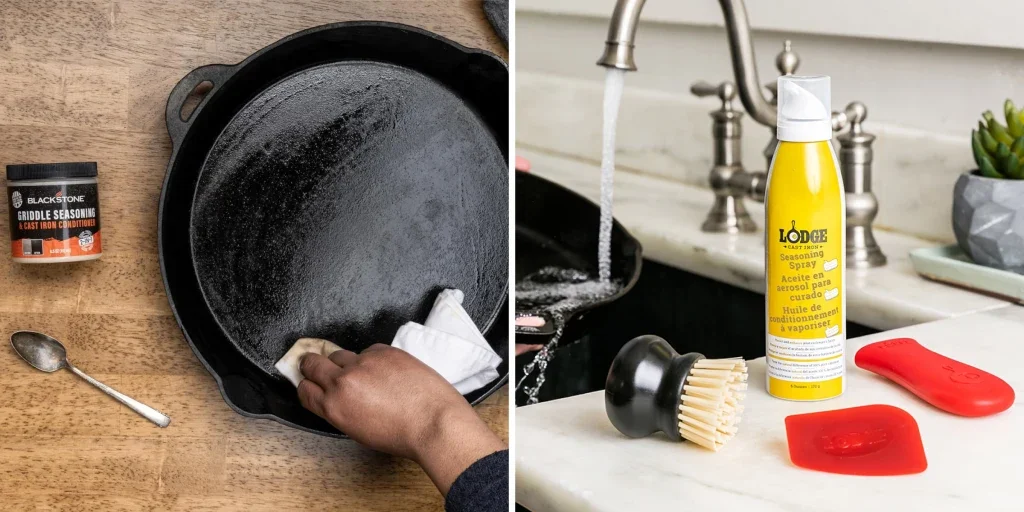
Signs of Well-Maintained vs. Poorly Maintained Seasoning
A well-maintained cast iron pan boasts a smooth, shiny, and dark surface. It glides food easily and resists sticking and rust. Poorly maintained seasoning appears dull, sticky, or flaky with visible rust spots. Uneven coloring or food sticking are indicators that the seasoning needs attention.
Must-Have Tools for Care and Maintenance
Cleaning Brushes and Scrapers
Maintaining seasoning begins with the right cleaning tools. Soft-bristle brushes or stiff nylon scrubbers efficiently remove residue without damaging the seasoning. Metal scrapers or chainmail scrubbers help with stubborn food particles but should be used gently to avoid stripping the seasoning layer.
Oil Types Suitable for Seasoning
Choosing the correct oil is vital for effective seasoning. Flaxseed oil is popular due to its quick polymerization and durable finish. Other options include grapeseed, sunflower, or vegetable oils. Avoid oils with low smoke points or heavy flavors that can affect the seasoning’s quality.
Heat Sources for Re-Seasoning
Consistent heat is necessary to bond oil to the cast iron surface. A household oven is the most reliable tool, providing even heat during the seasoning process. For those who prefer, stovetop burners or grill setups can also be utilized but require careful temperature control.
Step-by-Step Guide to Maintaining Seasoning at Home
Initial Cleaning Best Practices
After cooking, allow the pan to cool slightly but clean while still warm. Use a brush or scraper with hot water to remove food particles promptly. Avoid soap unless the pan is heavily soiled, as frequent soap use can break down the seasoning.
Applying and Reapplying Oil
Once clean and dry, apply a thin, even layer of your chosen oil to the entire surface, inside and out. Excess oil should be wiped off to prevent sticky buildup. Reapplication can be done as needed, especially after heavy use or exposure to moisture.
Proper Heating Techniques for Seasoning
Place the lightly oiled pan upside down in a preheated oven at around 450°F (230°C). Baking for an hour allows the oil to polymerize and form a hard, protective layer. Cool the pan in the oven to avoid sudden temperature changes that might damage the cookware.
Advanced Tools for Cast Iron Enthusiasts
Electric Seasoning Ovens and Temperature Controls
For serious cast iron users, electric seasoning ovens or precision temperature controllers offer consistent and controlled heat. These devices ensure optimal polymerization without the guesswork, improving the durability of the seasoning layer with minimal effort.
Silicone Brushes Versus Traditional Cloths
Silicone brushes provide a hygienic and efficient way to apply oil evenly, reducing waste. Unlike traditional cloths, they don’t absorb the oil, enabling precise control of the amount applied. However, some prefer cloths for their ease of use and availability.
Common Mistakes and How to Avoid Them
Using Harsh Cleaning Tools That Damage Seasoning
Avoid metal scouring pads or abrasive cleaners that strip away the seasoning. Such tools can create uneven surfaces, inviting rust and reducing the pan’s non-stick quality. Instead, use gentle brushes or scrapers designed for cast iron maintenance.
Over-Oiling and Its Consequences
Applying too much oil can result in sticky or uneven seasoning. Excess oil fails to polymerize properly, leaving a tacky surface that attracts dust and degrades quickly. Always wipe away surplus oil before heating to maintain a smooth finish.
Maintaining Seasoning Throughout Different Seasons
Seasonal Care Tips for Longevity
Humidity and temperature changes can affect seasoning durability. During humid months, increase the frequency of oiling to prevent rust. In colder seasons, store cookware away from damp areas and occasionally re-season if dryness causes cracking in the finish.
Storage Solutions to Preserve Seasoning
Store cast iron in a dry, well-ventilated space. Avoid stacking pans directly to prevent scratches. Placing a paper towel or cloth between pans absorbs moisture and helps maintain seasoning integrity over time.