Understanding the Mandoline Slicer
What is a Mandoline Slicer?
A mandoline slicer is a handy kitchen tool designed to slice fruits and vegetables quickly and uniformly. Unlike regular knives, it lets you adjust slice thickness with ease, making it perfect for preparing salads, chips, or garnishes. Its simplicity can dramatically speed up your prep work, but it does require careful handling to ensure safety.
Essential Components and Blade Types
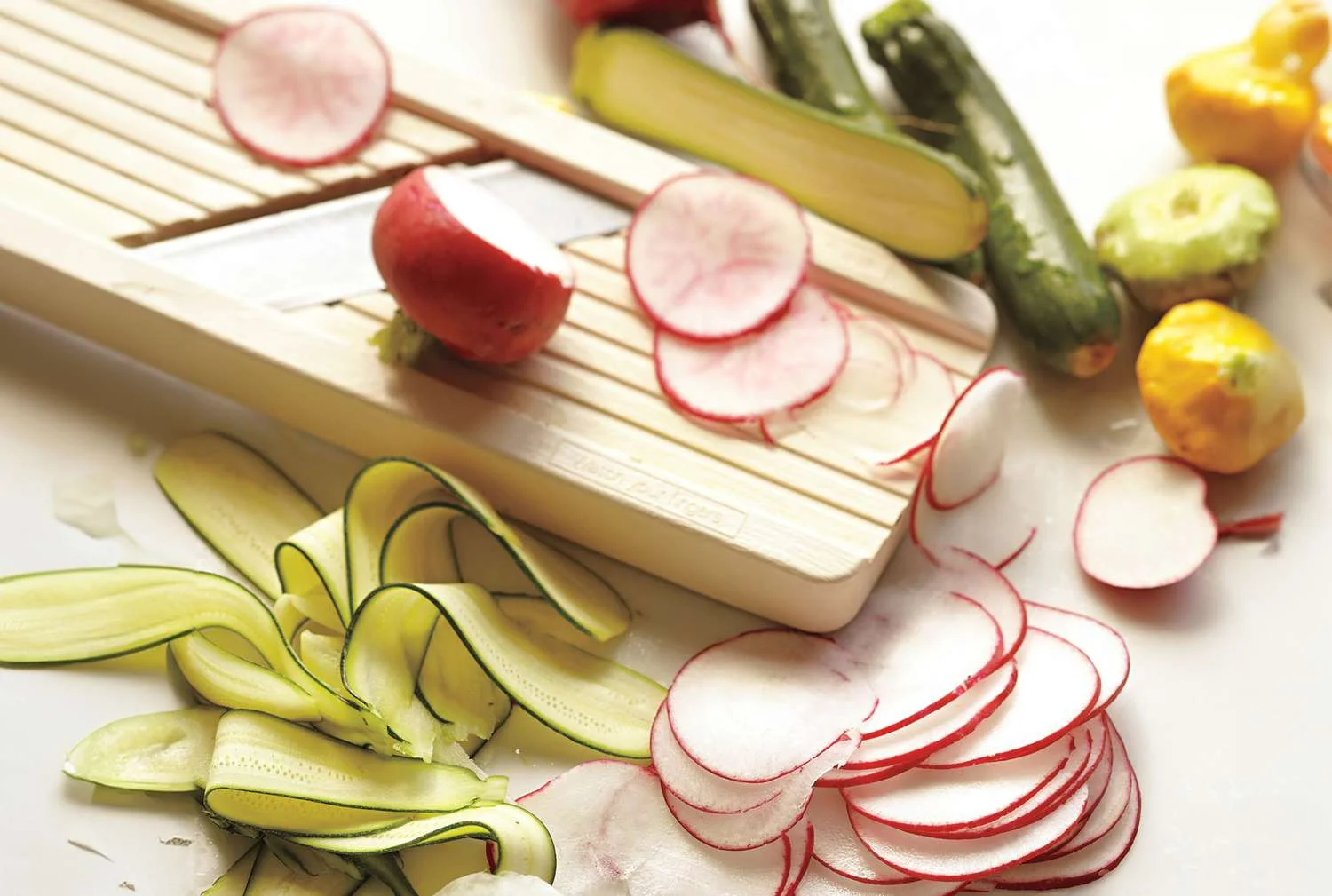
Most mandoline slicers come with a flat surface featuring an adjustable blade. This blade can be straight, julienne, or waffle-shaped depending on the desired cut. The adjustable platform allows you to change the thickness of the slices, while a handguard or food holder often accompanies the tool to protect your fingers. Understanding these parts is crucial before taking your first slice.
Preparation Before You Begin
Choosing the Right Mandoline for Your Kitchen
With many models on the market, picking the right mandoline boils down to your cooking habits. If you frequently slice firm vegetables like potatoes, a sturdy model with multiple blade options will be valuable. For casual use, lightweight and easy-to-clean options might be ideal. Consider the stability of the device too, as one with non-slip feet reduces the risk of accidents.
Safety Gear and Protective Accessories
Safety should never be an afterthought. Using a mandoline slicer without proper protection can lead to serious cuts. Always use the handguard that comes with the slicer. If your model doesn’t include one, investing in cut-resistant gloves is a smart move. These gloves offer an extra layer of protection without sacrificing dexterity, providing peace of mind while you work.
Step-by-Step Instructions for Safe Use
Setting Up the Mandoline Slicer
Before slicing, ensure your mandoline is placed on a flat, stable surface. If it has adjustable feet, make sure they’re locked in place. Attach the handguard securely and select your desired blade and thickness setting. Preparing your vegetables by washing and trimming ensures smooth slicing and reduces unexpected resistance.
Proper Hand Positioning Techniques
When slicing, your non-dominant hand should hold the vegetable inside the handguard or grip it firmly using cut-resistant gloves. Keep your fingers curled and clear of the blade’s path. Use a steady, controlled motion to slide the vegetable back and forth across the blade, resisting the urge to rush. This technique minimizes the risk of slips and injuries.
How to Slice Different Types of Vegetables
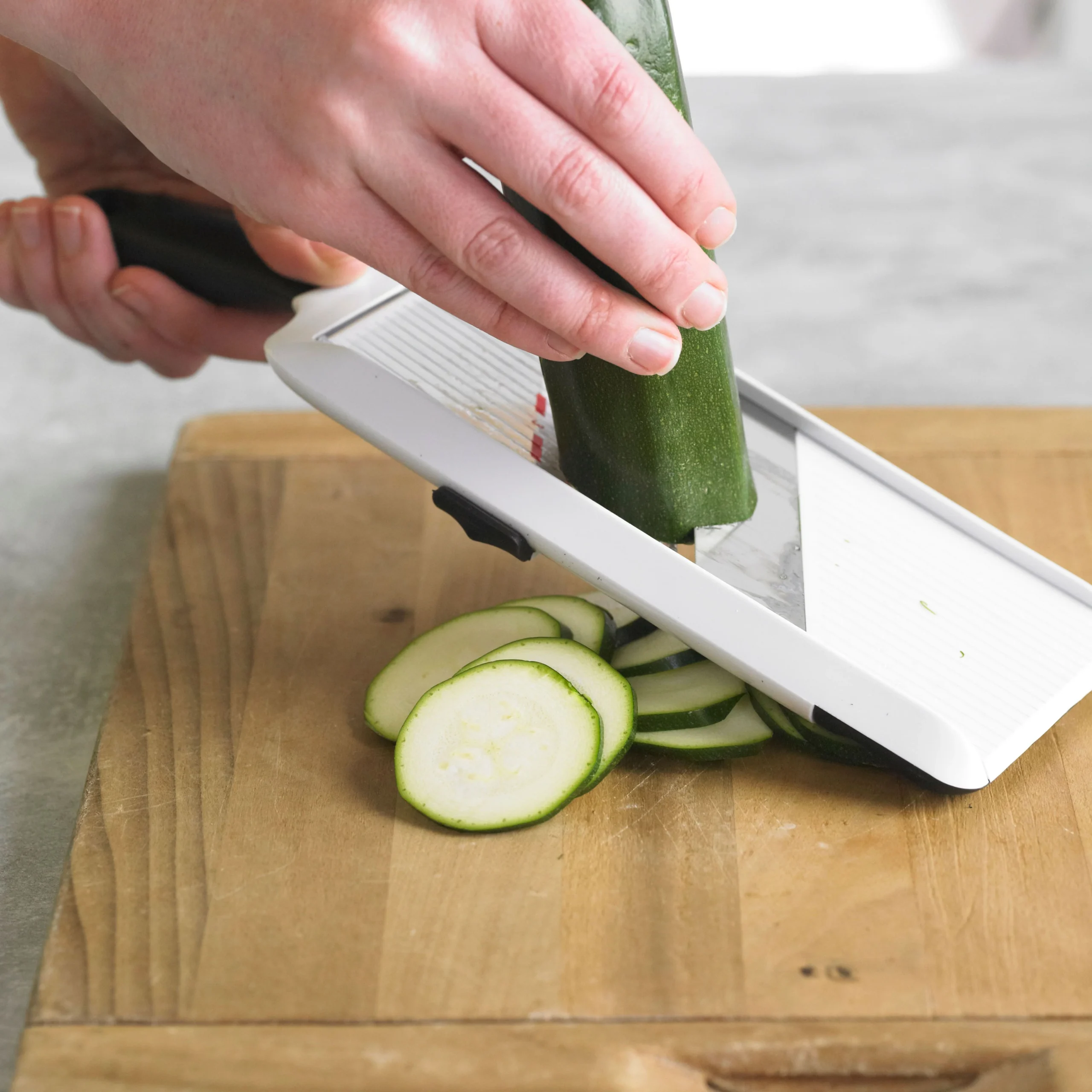
Different vegetables require subtle adjustments in technique. Firmer vegetables like carrots or potatoes benefit from a slower, more controlled slicing motion. Softer vegetables like tomatoes require a sharp blade and gentle pressure to avoid crushing. For odd-shaped items, cut them into smaller, manageable pieces before using the mandoline to maintain control and ensure even slices.
Tips for Maximizing Efficiency and Precision
Adjusting Thickness and Blade Settings
One of the main advantages of a mandoline is its ability to produce slices of varying thickness. Experiment with the settings to find the perfect balance for your recipe. Thin slices work well for chips or garnishes, while thicker slices suit gratins or stews. Using the correct blade and thickness adjustment will elevate the presentation and texture of your dishes.
Maintaining Consistent Slices Every Time
Consistency comes down to steady rhythm and proper technique. Keep a firm grip on both the vegetable and mandoline, and strive for smooth, even strokes. Avoid stopping mid-way, as this can result in uneven pieces. Over time, this practice will become second nature, making your prep faster and your dishes look more professional.
Cleaning and Maintenance
Safe Disassembly and Cleaning Practices
After use, disassemble your mandoline carefully, always handling blades with caution to avoid cuts. Most models allow you to remove blades easily for cleaning. Wash components in warm, soapy water and use a brush to clear any stuck food particles. Avoid putting sharp blades loosely in the sink to prevent accidents; instead, clean them individually with attention.
Storage Tips to Prolong Durability
Storing your mandoline properly ensures it stays in good condition for years. Dry all parts thoroughly before reassembling to prevent rust. Many models come with a protective cover or case—always use these to shield the blades. Keep the tool in a safe spot, out of reach of children or pets, to maintain both safety and functionality.
Common Mistakes and How to Avoid Them
Preventing Injuries
The most common mistake when using a mandoline is neglecting safety precautions. Always use the handguard, never force the vegetable through the blade, and take your time. Rushing increases the risk of slips, which can lead to painful cuts. If you feel uncomfortable, stop and reassess your technique or equipment before continuing.
Handling Difficult Produce Safely
Some produce, like round or small vegetables, can be tricky to slice. When possible, cut these into flat, stable sections to avoid rolling during slicing. Using a fork or tong to hold slippery items can also improve safety. Never attempt to slice produce too small for the handguard; in these cases, a knife might be the safer choice.