Understanding Texture Contrast in Culinary Arts
Definition and Importance of Texture Contrast
Texture contrast refers to the deliberate combination of different mouthfeels within a single dish. It means pairing elements that vary in their tactile qualities—such as crunchy with creamy or tender with chewy—to create a dynamic eating experience. This contrast can transform simple dishes into memorable meals by engaging more senses and adding complexity to the food beyond just taste.
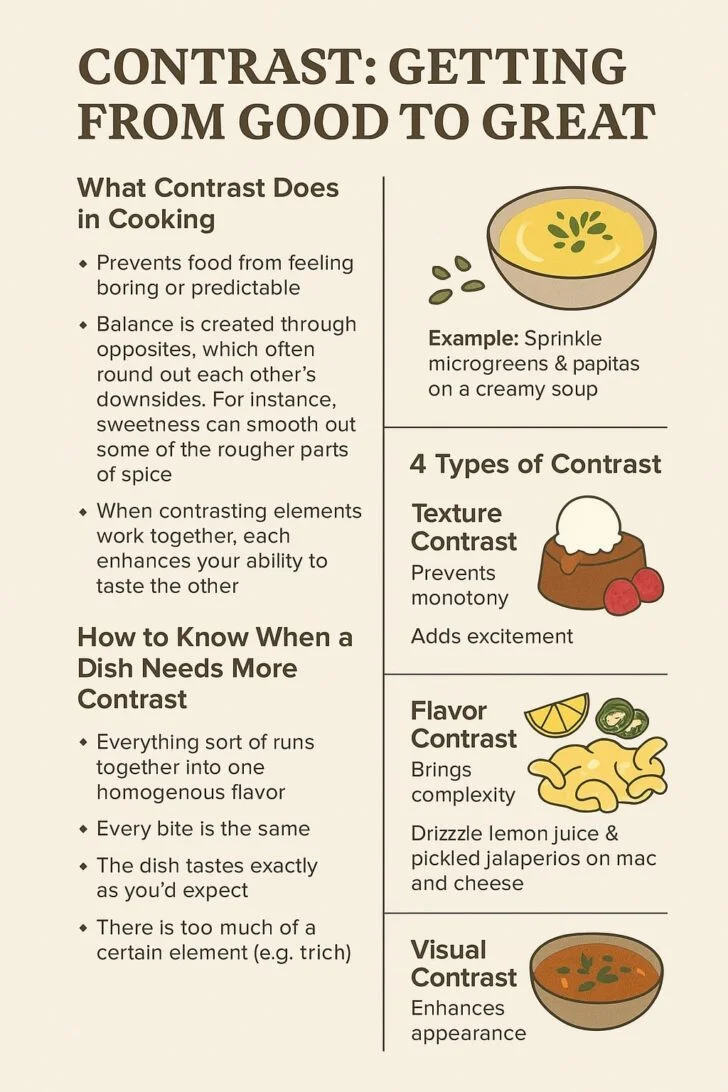
In everyday home cooking, texture contrast plays a crucial role. It elevates ordinary ingredients, making meals more enjoyable and satisfying. When thoughtfully applied, it can turn a straightforward salad or stew into something special that surprises and delights the palate with each bite.
How Texture Affects Flavor Perception
Texture does more than provide physical interest; it also impacts how we perceive flavors. For example, a crispy crust can amplify the sensation of a tender filling by providing a satisfying initial crunch before the flavors unfold. Similarly, creamy components can mellow strong tastes, while chewy textures can prolong flavor release in the mouth.
By incorporating texture contrast, home cooks can manipulate not only how food feels but also how flavors are experienced. This can make dishes appear richer, fresher, or more complex, even when using simple ingredients.
Common Textures and Their Culinary Roles
Crispy, Crunchy, and Crumbly
These textures tend to introduce an exciting “bite” and snap that stimulates the senses. Crispy fried coatings or crunchy toasted nuts add a lively contrast to softer elements. Crumbly textures, like fresh bread crumbs or pastry flakes, impart a delicate bite that breaks apart easily, offering a pleasing irregularity in the mouthfeel.
Soft, Creamy, and Silky
Soft textures provide a comforting and smooth experience. Creamy sauces, custards, or purees coat the palate and offer richness. Silky textures, often found in well-executed soups or mousses, create a luxurious sensation that can balance against more solid or coarse ingredients, introducing harmony in a dish.
Chewy, Firm, and Tender
Chewiness adds substance, requiring more engagement from the eater. Items like cooked meats, hearty grains, or certain vegetables offer this texture. Firm textures, such as lightly steamed veggies or al dente pasta, convey freshness and structure, while tender textures show the skill of proper cooking that softens without losing shape or moisture.
Techniques to Introduce Texture Contrast in Home Cooking
Layering Different Textures in a Single Dish
One effective way to enhance meals is by layering contrasting textures in the same dish. For instance, a casserole might combine a crispy breadcrumb topping with a creamy filling and tender vegetables inside. This layering ensures each bite offers varied sensations, keeping the palate engaged throughout the meal.
When layering, consider alternating textures that complement rather than compete. A dense element followed by a light, airy one can create a natural rhythm that enhances the eating experience without overwhelming.
Using Fresh vs. Cooked Ingredients
Incorporating fresh ingredients into cooked dishes is a simple yet powerful method to introduce texture contrast. A warm pasta dish topped with fresh, crunchy herbs or vegetables will feel more vibrant than pasta alone. Similarly, adding a handful of raw slivers or a crisp salad on the side provides relief from heavier components.
Balancing temperature and texture in this way adds depth and freshness, making everyday meals feel more thoughtfully prepared.
Incorporating Nuts, Seeds, and Homemade Croutons
Nuts and seeds are excellent tools for introducing crunchy or crumbly textures. Toasting them enhances their flavor and crispness, making them ideal toppings for salads, grain bowls, or roasted vegetables. Homemade croutons, crafted from day-old bread, offer a rustic crunch that elevates soups and salads alike.
These additions not only improve texture contrast but also contribute nutritional benefits, including healthy fats and fiber, broadening the appeal of simple home-cooked meals.
Examples of Texture Combinations to Try at Home
Salads and Dressings
A classic example is pairing crisp lettuce or kale with creamy avocado and crunchy toasted nuts. A dressing with a slightly thick, velvety consistency complements these ingredients perfectly, marrying the different textures without overshadowing any single element. Introducing fresh fruits or seeds can add unexpected bursts of texture that enliven the salad further.
Main Courses: Meat, Vegetables, and Grains
For main dishes, consider combining tender roasted meats with slightly chewy grains like farro or barley. Adding roasted vegetables with caramelized edges creates a firm texture contrast. Including a crunchy side, such as pickled vegetables or a crisp slaw, offers a refreshing counterpoint and cleanses the palate between bites.
Desserts with Texture Play
Desserts provide a wonderful opportunity to experiment with textures. Think of a creamy panna cotta topped with crunchy caramel shards or a soft cake paired with crisp fruit crisps. Incorporating nuts, crumbly streusel toppings, or smooth sauces adds layers of texture that make simple desserts feel luxurious and thoughtfully crafted.
Tips for Balancing Texture Without Overwhelming the Palette
Finding the Right Contrast Ratio
While texture contrast can enhance a dish, too many conflicting textures can confuse the palate or detract from the flavors. Aim for a balanced ratio where one texture dominates and others complement it subtly rather than competing for attention. For instance, a creamy soup with small crunchy garnishes highlights the contrast without overwhelming the overall experience.
Gradually introducing texture contrast through small elements—like a sprinkling of toasted nuts or a side of crunchy vegetables—can help maintain harmony.
Seasoning and Presentation to Highlight Texture
Proper seasoning is key to ensuring that texture contrast shines. Salt can amplify crunch, while acid in dressings can highlight freshness and crispness. Presentation also matters; arranging contrasting textures visibly encourages appreciation. For example, placing crunchy toppings atop creamy bases invites anticipation and signals texture differences to diners.
Thoughtful plating, combined with balanced seasoning, helps create a sensory journey that embraces texture alongside flavor.
Conclusion: Elevate Your Daily Meals with Thoughtful Texture Contrast
Incorporating texture contrast into everyday home-cooked meals brings newfound excitement and sophistication without requiring complex techniques or exotic ingredients. Understanding the role of different textures and using practical methods—like layering, fresh versus cooked contrasts, and adding crunchy elements—can transform simple dishes into multi-sensory experiences.
By paying attention to balance and thoughtful seasoning, home cooks can elevate their meals in ways that delight the senses and keep family and friends eagerly coming back for more.